Describe the destination before choosing the route
Begin with the proposed position and the model under discussion. Share the country, town and location through the supplier’s agreed project process. Add an overview showing the house, entrances, proposed base and the surrounding outdoor space. Explain why you like the position and which parts could still change.
This gives the conversation a purpose. If the preferred corner is difficult to reach, the team can consider the consequences before you commit to the setting. Practical information is most useful when it is connected: the selected cabin, its confirmed transport requirements and the place where you want it to end up should all describe the same project.
Show the approach as a sequence
Photograph the approach from the road to the entrance and onwards to the proposed position. Capture turns, gateways, surfaces, slopes and any visible obstacles. Note changes that a wide overview can hide, such as a narrow section behind a gate or a low branch further along the route.
Take photographs only from safe positions. Where dimensions are needed, agree with the transport team which measurements will help and how they should be recorded. Images and measurements are preparation for a professional assessment, rather than proof that a vehicle or load will fit. A sequence of clearly labelled views is easier to discuss than a large collection of unexplained pictures.
Separate transport, unloading and final placement
Ask where the transport provider’s work ends. Delivery to an entrance, unloading at a suitable point and placing a cabin on its prepared base can be different services. Identify who arranges each one and who will be the contact on the day.
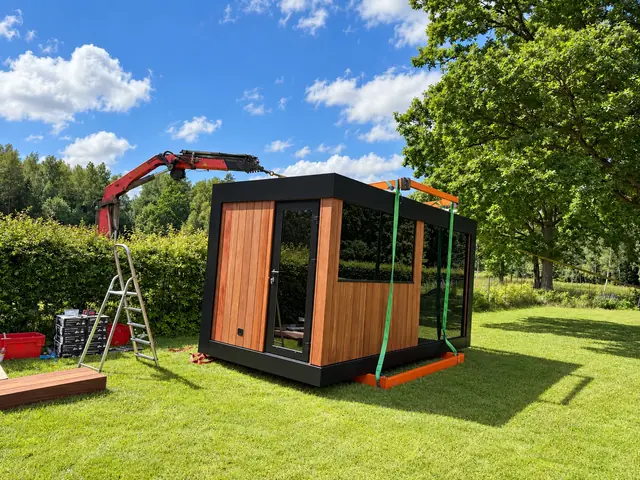
If lifting equipment is proposed, the responsible specialists need to assess its location, reach, ground conditions and surroundings. Give them the information they request and let them set the working arrangements. Avoid assuming that an open-looking space provides a safe lifting position. The benefit of separating these tasks is clarity: everyone can see what has been arranged and which part still needs attention.
Prepare the base from confirmed information
Request the requirements for the chosen cabin before commissioning a base. The relevant local professionals should assess the ground and design or prepare the support as appropriate. Confirm how the finished base will be checked for the product that is actually being delivered.
A rendering or a photograph is not enough information for structural decisions. The same applies to a base someone used for a different cabin. Keep the project drawings, specifications and site assessment together so that contractors can work from current information. This is a stage where a clear document can prevent a great deal of rework and make the arrival day far less complicated.
Coordinate permissions and connections early
Ask the local authority and qualified local providers which approvals and connection requirements apply to your location and intended use. Resolve those questions before ordering or starting works. A private garden and a commercial guest setting may need different conversations.
Use the confirmed equipment specification when arranging electrical work or other utilities. Agree who completes each connection, what access they need and how commissioning will be organised. Keep those responsibilities separate from the transport booking. A delivered cabin is a significant milestone, while readiness for use depends on the whole agreed process being completed. Planning that distinction protects both your schedule and your expectations.
Make delivery day straightforward for the people doing the work
Confirm the date, contacts, access arrangements and site readiness through the agreed project process. Let the team know if anything has changed since the assessment: roadworks, a new fence, softened ground or restricted access can matter. Ask what the site needs to provide and which areas should be kept clear.
Arrange a sensible way to manage household members, visitors and pets while work is taking place, following the specialists’ instructions. Have the current project information available to the responsible contact. The aim is a calm, prepared handover in which the people doing the work can concentrate on their own roles rather than resolve missing information at the gate.
Check the handover before planning the first session
Agree how the cabin and supplied items will be inspected on arrival, how any issue should be recorded and who will handle it. Obtain the relevant operating, maintenance and equipment instructions. Ask which checks or connections remain before the sauna is ready for use.
Take time to learn the controls, ventilation arrangements and care routine. A good handover is an opportunity to replace assumptions with clear instructions. Keep the information somewhere that another responsible person can find it later. This matters at a family home and becomes particularly useful at a holiday property, where the person who accepted delivery may not always be the person operating the sauna.
Complete the last few metres for everyday use
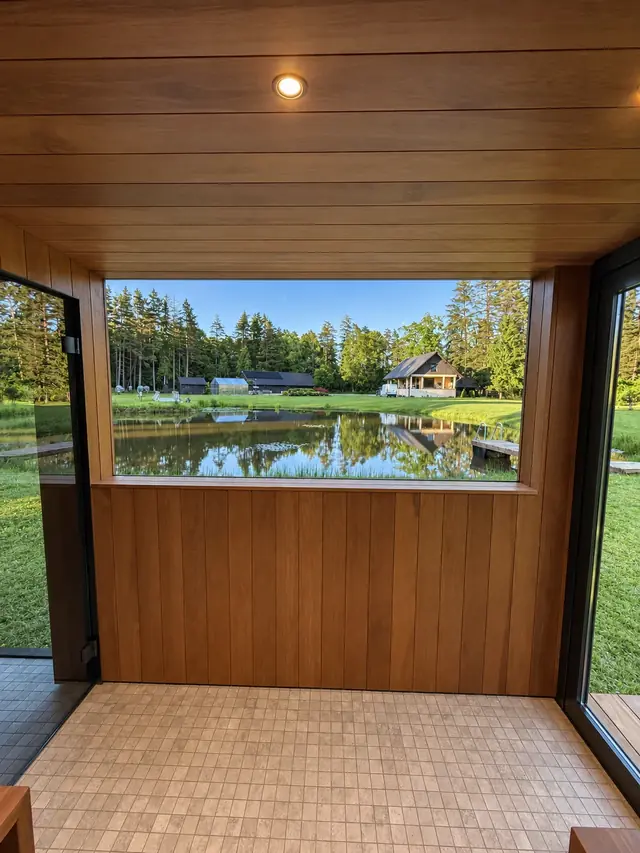
Once the logistics are clear, return to the ordinary journey from your house to the sauna. Think about lighting, privacy, footwear, towels and where people will sit afterwards. Consider the path on a dark or wet evening, as well as in the weather shown in the photograph.
These finishing decisions make the cabin feel like part of your place. A practical arrival plan gets it into position; thoughtful surroundings help you enjoy using it. You can start simply, with a clear route and a comfortable resting spot, and improve details as you learn your preferences. The first sauna evening should begin with familiar instructions and a welcoming space.
Already have a place in mind?
A few thoughts can become your first project brief.