Before the private bathroom
A sauna once answered an everyday need. The City of Helsinki’s museum history describes public saunas as important places to wash when private bathrooms were uncommon. As the city grew, bathing also became a shared urban routine. Later, bathrooms at home changed the role of these public rooms, which found a renewed place in leisure. Helsinki’s public saunas grew with nineteenth-century urbanisation and numbered more than 120 in the 1940s. As private bathrooms became common, their numbers fell; in the twenty-first century, public sauna found a renewed role in recreation.[1]
That change is a useful starting point for understanding sauna today. The room did not lose its meaning when washing became easier elsewhere. Its purpose widened. People could still gather, sit in warmth and create a recognisable break in the week. The modern pleasure grows out of an ordinary act of looking after oneself.
A Finnish tradition that lives between people
UNESCO recognised Finland’s sauna culture as intangible cultural heritage in 2020. UNESCO describes Finnish sauna culture as a practice carried through homes and public places, with meanings reaching beyond washing. Its recognition concerns living knowledge and customs. That is different from preserving one particular style of building.[2]
Think of a family member showing a newcomer where to sit, a host explaining how the heater works, or friends making room for one another. These small exchanges are how a tradition continues. A beautifully built cabin provides the setting; the people give the evening its character. You can take care of that character through welcome, patience and consideration, even when the room and the heating system are entirely contemporary.
Löyly: a word for an experience
The Finnish word löyly describes the heat and steam released when water meets the hot sauna stones. Finland’s official cultural account places that experience alongside preparation, conversation and family memories. Water should only be used as permitted by the particular heater’s instructions.[3]
The word is useful because it reminds us to notice the quality of the moment. An evening has many textures: warmth on the skin, the sound of water, the pause when a conversation falls quiet. You do not need to turn them into a performance. Give the people sharing the room a say in how that experience unfolds.
Latvia’s pirts and a relationship with nature
Latvian pirts has its own cultural language. Latvia’s national tourism organisation describes plant whisks, preparation and the guidance of a bathhouse attendant among its traditions. These details belong to a long relationship between the bathing ritual and the natural world.[4]
For a visitor, the interesting question is what those details mean to the people practising them. A skilled host can explain local customs and invite participation at a comfortable pace. Ask questions and discuss boundaries. Cultural accounts sometimes include inherited healing beliefs; those beliefs tell us about history and identity, while medical questions deserve medical evidence. Curiosity and respect are enough to begin.
The smoke sauna: preparation as part of the story
The Võro community’s own account of smoke sauna describes a chimneyless room heated with wood and ventilated before bathing. It also describes family knowledge passed between generations. The preparation belongs to the experience as much as the time spent on the bench.[5]
This helps explain the appeal of visiting a traditional sauna with an experienced host. You encounter a place, its skills and the people who keep them alive. Your first visit can be an opportunity to learn rather than a set of customs to copy immediately at home. Different communities have different practices, and the host’s instructions matter.
Today: more ways to make room for warmth
Today’s sauna landscape includes public bathing places, traditional wood heating, electric cabins, and other forms of heat experience. The choice changes the preparation and the setting. It also opens the ritual to different kinds of homes and schedules.
For someone who enjoys tending a fire, preparing the heat may be part of a long afternoon. Another person may prefer an electric sauna that fits a quieter evening after work. These are choices about how to live with the room. Ask which activities you want to repeat, what you want to maintain and where you will rest afterwards. The right arrangement leaves room for the experience itself.
What survives when the building changes
A modern garden sauna can honour the spirit of a tradition through thoughtful use. Welcome a first-time guest. Explain the practical arrangements before everyone undresses. Let each person choose when to enter or leave, and agree whether the evening will be quiet or sociable.[6]
Those decisions make the room feel generous. Someone who has never used a sauna should be able to ask a basic question without embarrassment. A person taking an early break should have a comfortable place to sit. The Finnish Sauna Society places peaceful bathing and consideration at the centre of its own customs: a helpful example of the care that can surround the heat.
The next chapter can be yours
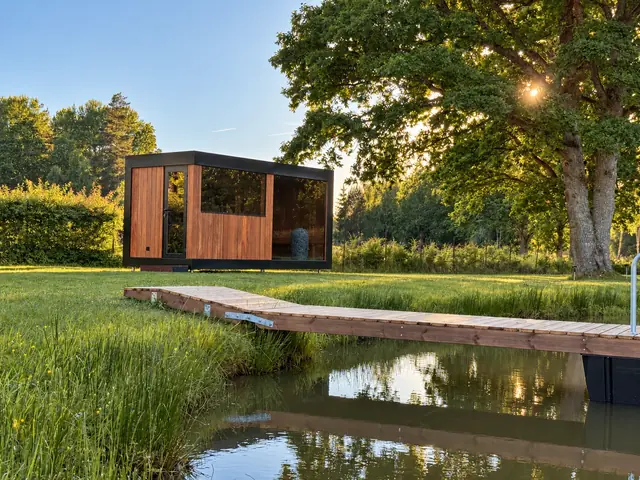
Modern electrically heated cabins offer two layouts around which to shape an evening: a compact sauna and a sauna with a separate lounge. The useful connection to history lies in what you make possible there. Perhaps you want a private pause, a conversation with your partner, or a familiar welcome for friends.
Start with that picture, then make the practical plan support it. Think about the path from the house, the place for towels and the seat waiting after the heat. A sauna’s story continues when it becomes a place people want to return to, with their own memories and enough time to enjoy them.
Sources & further reading
- Public saunasHelsinki City Museum · Ida Suolahti · 2024 · Sources checked on
- Sauna culture in FinlandUNESCO Multimedia Archives · 2019 / heritage inscription 2020 · Sources checked on
- Unesco highlights the intangible but very real spirit of Finnish sauna culturethisisFINLAND / Ministry for Foreign Affairs · 2021 · Sources checked on
- Bathing traditions in LatviaLatvia Travel / LIAA · Sources checked on
- Smoke sauna and customsVõromaa smoke sauna heritage community · cultural source · Sources checked on
- Sauna bathing and customsFinnish Sauna Society · Sources checked on
Already have a place in mind?
A few thoughts can become your first project brief.