The body meets warmth
Heat asks the body to manage its temperature. Harvard Health describes increased skin temperature, sweating and a faster pulse during sauna bathing, while blood pressure can respond differently between people. The warmth can feel pleasant and still place demands on circulation.[1]
For your own evening, this makes comfort a better guide than ambition. You can choose to leave, sit elsewhere or finish earlier than another person. A higher setting or a longer stay is not a meaningful score. The practical benefit of understanding the response is simple: you can pay attention to it, rather than assuming that every uncomfortable sensation means the sauna is working better.
Sweating is part of temperature control
Cleveland Clinic explains that sweat is mostly water and helps the body cool through evaporation. The liver and kidneys do the main work of removing waste products. Heavy sweating is therefore a poor measure of cleansing or of how much benefit you have received.[2]
This changes the question to ask after a session. Instead of counting how wet your towel became, consider whether the experience felt manageable, whether you had water available and whether the recovery space was comfortable. A brief visit can still be a satisfying visit. Following any personal medical guidance about fluids matters more than copying a generic drinking target from someone else’s routine.
A more comfortable way to unwind
Warmth may offer temporary comfort for some people. Cleveland Clinic’s clinical guidance discusses possible relief of sore muscles and relaxation, while also acknowledging the need for more research. Individual responses vary, and ongoing pain should be assessed properly.[3]
You can approach that possibility through an ordinary leisure experience. After a walk or a working day, you might enjoy sitting quietly, putting aside your devices and allowing time for a gradual transition home. Those choices are valuable in their own right. Notice what feels good without assigning every pleasant feeling to a specific biological mechanism or expecting the sauna to solve a persistent health problem.
What short-term circulation research can show
A University of Eastern Finland research account describes an experimental study of 100 participants in which a sauna session was followed by changes in blood pressure and measures of arterial stiffness. These measurements help researchers investigate how heat affects circulation.[4]
They do not tell every visitor what will happen to their own readings, nor do they establish a personal sauna prescription. A short-term measurement and a long-term health outcome answer different questions. If you see a dramatic headline, ask what was actually measured, who took part and when the measurement was made. Understanding the question makes the finding useful without turning it into a promise.
Why the longer view remains complicated
In a 2023 randomised trial, 41 adults with stable coronary artery disease were allocated to sauna use or a control condition for eight weeks. Sauna did not improve the main vascular health measures examined. This is one defined group and study design, rather than a verdict on every possible use of heat.[5]
It is also a useful reminder that appealing explanations need to survive testing. Feeling relaxed, changing a laboratory measurement and preventing future disease are different outcomes. Results cannot simply be transferred from one sauna type, patient group or programme to another. A responsible account leaves room for promising questions and for results that do not confirm the hoped-for effect.
What the mind may gain from the setting
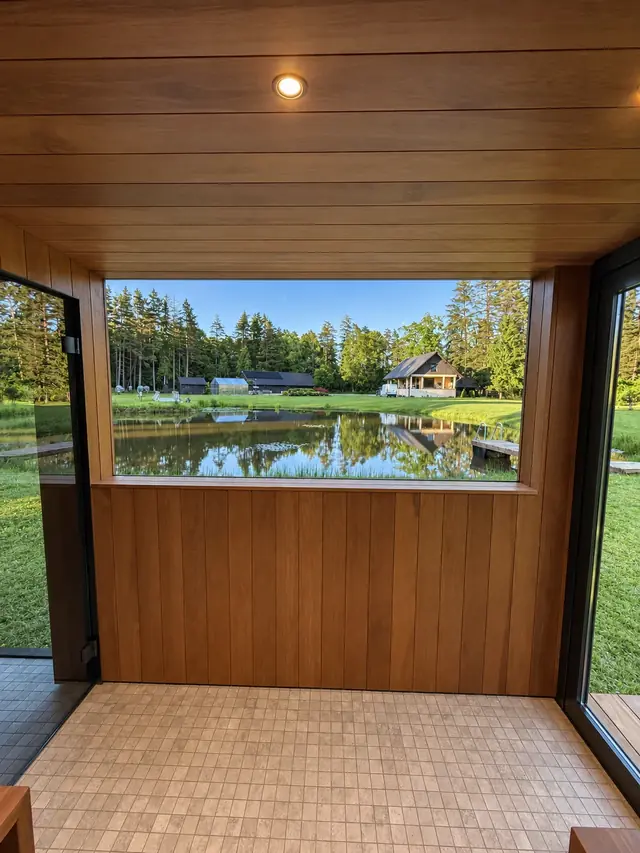
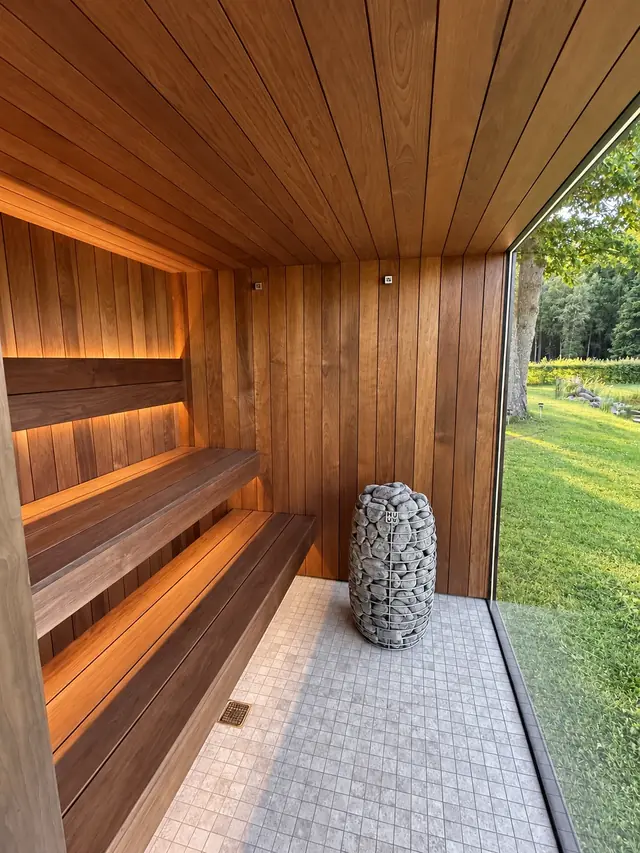
The room can give you a place to direct your attention differently. You may choose silence, listen to a companion, watch the garden or enjoy the interval between activities. This is a way of arranging your time and surroundings, and your experience will be personal.
There is no need to describe that pause as a treatment for depression, anxiety or insomnia. If symptoms are affecting your life, seek appropriate support. An enjoyable sauna evening can sit alongside ordinary care for yourself: movement you enjoy, meals, sleep and human contact. It can be one chosen part of your life without carrying responsibility for all of your wellbeing.
Enjoyment works best with practical boundaries
Keep the evening flexible. Follow the equipment instructions, leave if you feel unwell and allow an easy way out of the room. Avoid alcohol around sauna bathing and cool down gradually. Harvard Health advises people with heart disease or uncontrolled high blood pressure to check with their doctor first.[1]
Personal questions are worth discussing before a visit, especially where a health condition, pregnancy or medication may affect heat tolerance. Tell a clinician the kind of sauna you plan to use and any other activities you are considering. An internet article cannot assess those circumstances. Cold plunges also deserve a separate conversation; a restful cool-down can simply be part of your evening.
Choose an experience you want to return to
Picture a successful evening in practical terms. The room is ready, you know how it works, and there is a place to sit afterwards. You can stop when you want to. You finish feeling that the time was yours, rather than that you completed a challenge.
That is a useful foundation for choosing a cabin or planning a visit. Look at the space for preparation and rest, as well as the sauna itself. Ask what would make the experience easy for the people using it. The most convincing benefit is one you can describe honestly: enjoyable warmth, a comfortable pause, or time shared with someone whose company you value.
Sources & further reading
- Sauna Health Benefits: Are saunas healthy or harmful?Harvard Health Publishing · 2020 · Sources checked on
- SweatCleveland Clinic · Sources checked on
- Get Your Sweat On: The Benefits of a SaunaCleveland Clinic · Amy Zack, MD · 2024 · Sources checked on
- Scientists uncover why sauna bathing is good for your healthUniversity of Eastern Finland · 2018 · Sources checked on
- Finnish sauna bathing and vascular health of adults with coronary artery disease: a randomized controlled trialDebray et al. · Journal of Applied Physiology · 2023 · Sources checked on
Already have a place in mind?
A few thoughts can become your first project brief.