A boundary between one part of the day and the next
Home and work often share the same phone, room or stretch of attention. A small journey into the garden can make the transition more deliberate. You close one door, prepare for the sauna and enter a setting with a different purpose.
You do not need to claim a change in hormones to value that boundary. It may simply help you decide what the next hour is for. Put practical matters in order first: check that nothing needs your immediate attention, agree arrangements with your household and give yourself enough time afterwards. The pleasure lies partly in being able to settle without mentally waiting for the next task.
Fewer decisions can make room for the experience
An elaborate routine can become another thing to organise. Start with the essentials you actually use: clean towels, drinking water, a place for clothing and a safe route to the resting area. Give them regular homes so preparation is familiar.
This is especially useful when several people share the sauna. Agree who prepares the room and who tidies it afterwards. A simple arrangement stops the practical work from silently belonging to the same person every time. The gain is concrete: fewer interruptions, less searching and more time to enjoy the evening you prepared. Accessories can follow later if they solve a real need.
The relief of doing one thing at a time
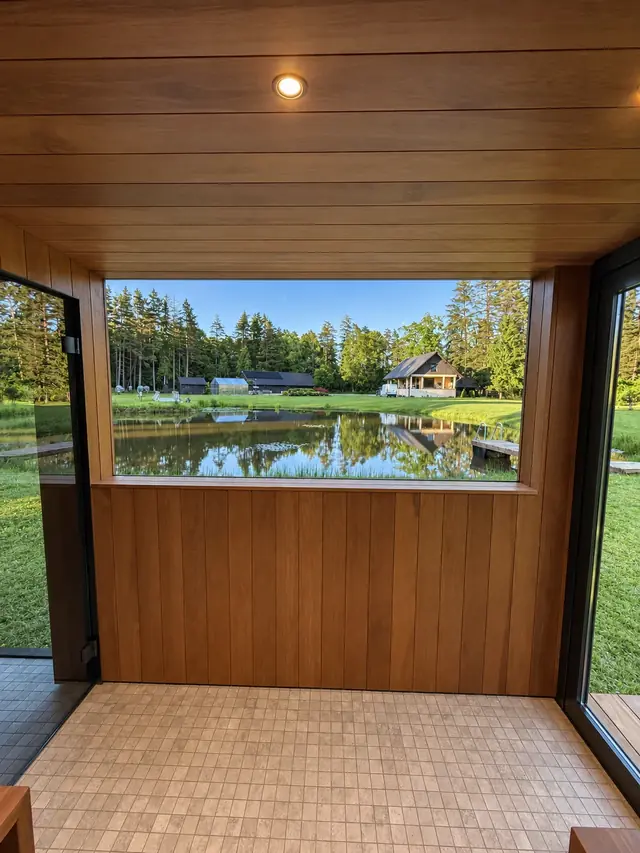
In the sauna, you can choose a modest focus: the view, the warmth, a familiar sound or a conversation. Leave the phone somewhere suitable and follow the equipment’s rules about what may be brought inside. The room does not need to become an office with better scenery.
A useful experiment is to choose one small intention for the evening. Perhaps you want to listen without checking messages, or simply to be quiet. Afterwards, ask whether that intention made the time feel different. This is personal reflection, not a mental health assessment. You are allowed to appreciate an enjoyable pause without measuring it or turning it into a new standard to meet.
Shared time begins with permission
Good company does not always mean continuous conversation. Ask whether people would enjoy quiet, chatting or a mixture of both. Make it easy to step out, decline steam or take a separate break. The Finnish Sauna Society emphasises respect and peaceful bathing within its own community.[1]
At home, that spirit can be expressed through ordinary courtesy. Introduce the controls before the room fills, explain the practical arrangements and let guests ask basic questions. Someone new to sauna should be able to enjoy being there without pretending to know every custom. Shared time becomes more comfortable when preferences are spoken about and nobody has to guess the rules.
Why the space afterwards matters
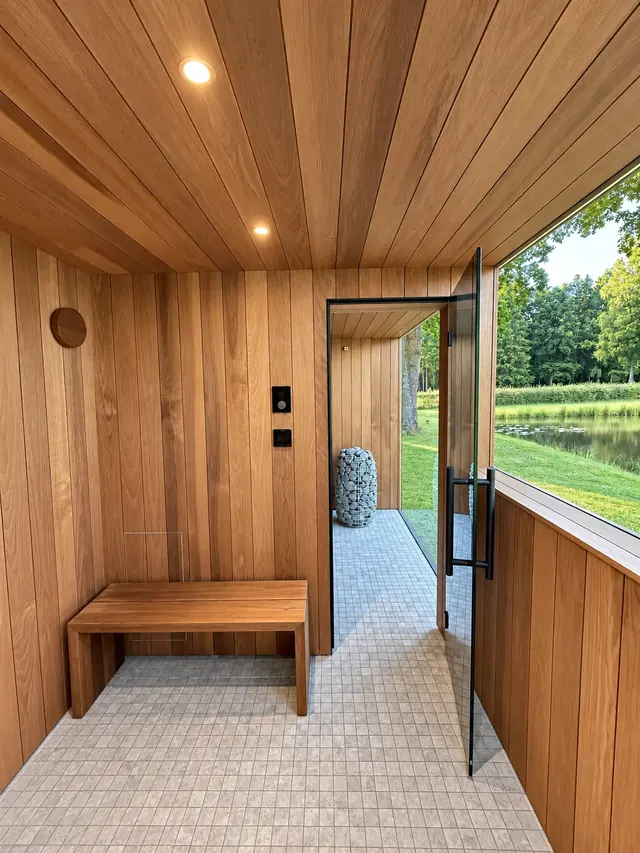
A resting place gives the evening room to unfold. Think about where you will sit, how you will dry off and what you can see from the seat. A sheltered bench may be enough. At a holiday home, a lounge can offer a place to pause when the weather changes.
Imagine using the route in less photogenic conditions: darkness, rain or the cold part of the year. Are the path and steps easy to use? Is a dry towel close to hand? These questions connect the visual design to everyday pleasure. The gain comes from feeling welcome throughout the visit, including the moments outside the heated room.
A small ritual can stay flexible
A familiar sequence can help you organise the time: prepare, warm up, rest and decide what you want next. It need not have a fixed length or a required number of rounds. Some evenings will be brief. Others may leave room for a longer conversation afterwards.
Treat that flexibility as part of the design. You can finish when you have had enough, even if a companion continues. A successful visit is one that suited the people present. If the routine starts to feel like an obligation, simplify it. The cabin should support the life you have, including changes of season, different schedules and occasional evenings when you would rather stay indoors.
Pleasure and wellbeing deserve honest language
Clinical guidance discusses possible relaxation benefits from sauna, but your own experience remains individual. A calmer-feeling evening is different from treating a mental health condition. Persistent problems with mood, stress or sleep deserve qualified attention.[2]
You can still describe the gains you notice in plain terms. Maybe you enjoyed a conversation without interruption. Maybe preparing the sauna gave a weekend a clear moment to share. Maybe the quiet simply felt pleasant. Those observations are meaningful and believable. They do not need a medical label to justify the time, and they leave room for someone else to enjoy the same space in a different way.
Build the habit around what matters to you
Before choosing a layout, write one sentence about the evening you want. For example: “We want a place to unwind together after a walk, with somewhere sheltered to sit afterwards.” That is a planning example, not a formula for everyone.
Use the sentence to judge your decisions. Does the location feel private enough? Is there room for the changing arrangements you need? Will the space afterwards encourage you to stay? Different layouts provide different possibilities for that conversation. The important next step is to connect the cabin with your own routine so that using it feels natural, welcoming and worth making time for.
Sources & further reading
- Sauna bathing and customsFinnish Sauna Society · Sources checked on
- Get Your Sweat On: The Benefits of a SaunaCleveland Clinic · Amy Zack, MD · 2024 · Sources checked on
Already have a place in mind?
A few thoughts can become your first project brief.