Describe a real evening in ordinary detail
Write a short account of how the visit would work. Who arrives first? Where do they leave belongings and change? How do they reach the room, and where do they go afterwards? A useful description includes the transitions as well as the time spent in the heat.
For example, a couple may want a quiet visit followed by a sheltered seat, while a group staying at a holiday home may need clear instructions and room for different routines. These are planning examples. Your own description might be simpler. Use it to identify the things that would make the experience feel easy, comfortable and worth making time for.
At home, familiarity is part of the pleasure
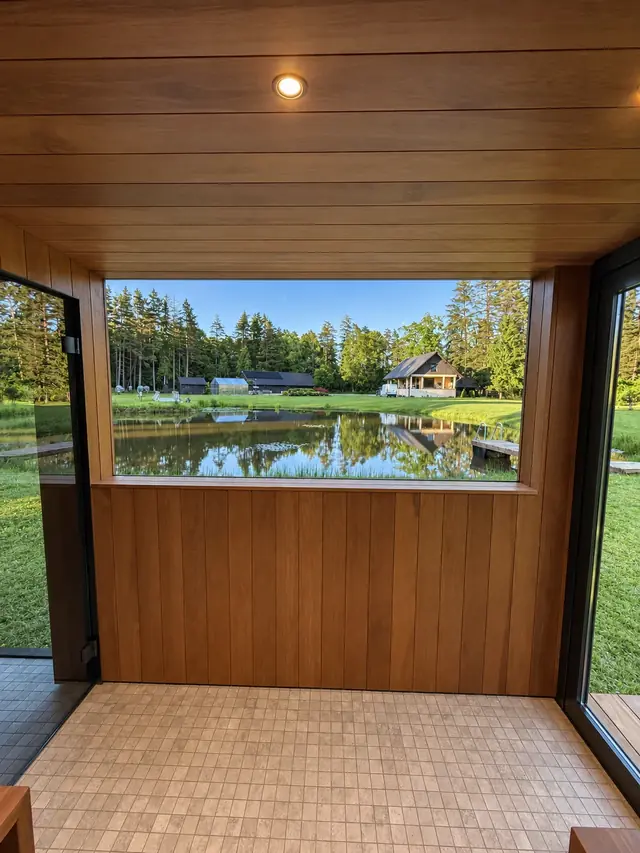
A garden sauna can fit naturally into everyday life when the practical journey feels straightforward. Look at the route from the house, lighting, privacy and the way the location relates to the rest of the garden. Think about the view from inside and how the room feels when you arrive.
Also consider the quieter details: hooks, towels, shoes and a seat after bathing. You may already have some of these arrangements in the house, or you may prefer to keep the whole visit close to the cabin. Discuss those preferences before choosing a layout. The right decision should serve the way your household actually uses its space.
At a holiday home, plan for different arrivals
A holiday property often has an uneven rhythm. It may be empty for a period and then welcome people with different levels of sauna experience. Think about who prepares the room, checks it before use and explains the controls to a visitor.
Keep the operating and care instructions accessible to the responsible person. Discuss cleaning, maintenance and any procedures needed after periods without use with the supplier. The setting can still feel spontaneous and relaxed, while the practical arrangements are well understood. A guest should be able to find out what to do without searching through a long message thread or guessing how a previous visitor used the equipment.
For hospitality, design the welcome as well as the view
If the sauna will be part of a guest experience, consider booking, access, supervision arrangements where applicable, cleaning and the instructions people receive. Ask qualified local professionals which requirements apply to the intended commercial use. Confirm the product’s suitability and operating arrangements in that context.
Write the guest journey in clear language: how to arrive, what is provided, who to contact and what to do when finished. A welcoming experience depends on reliable everyday care. Attractive photographs may introduce the space, while understandable instructions and consistent preparation help people enjoy it once they arrive. Keep capacity, cost and business assumptions tied to confirmed project information.
Choose between a compact room and more space to pause
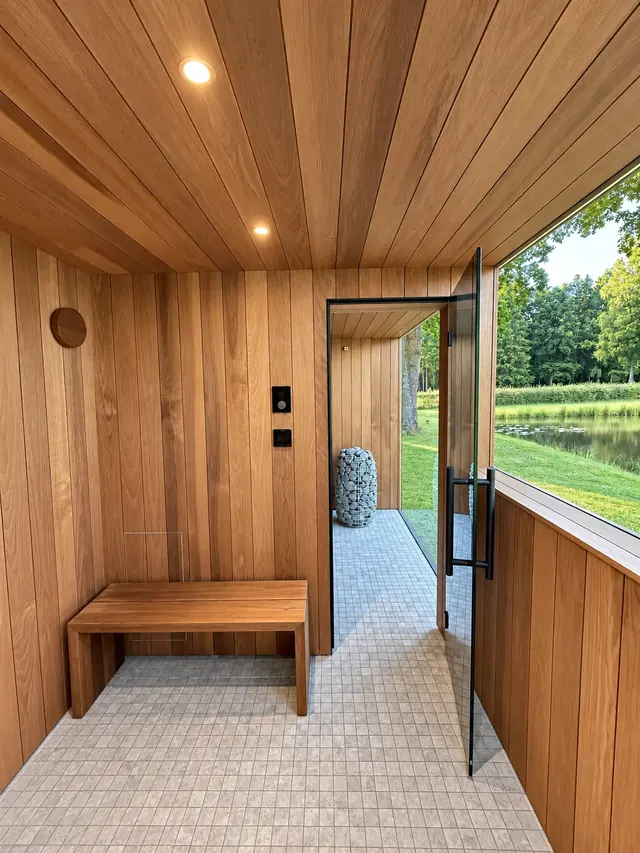
Aura provides a compact sauna layout; Aura Lounge adds a separate lounge. These are two different starting points for planning the space. Consider where changing and resting will happen in your particular setting rather than assuming one arrangement is automatically better.
A home with convenient indoor changing space may have different needs from a cabin some distance from the main building. A sheltered lounge may be appealing when people want to stay together between visits to the sauna. Match these ideas to the confirmed drawings and specification. Discuss how the spaces connect, what is included and which arrangements you will provide around the cabin.
Make the visit comfortable for the people you expect
Talk about preferences early. Some visitors enjoy conversation and others want quiet. Some will take a short visit and spend more time in the resting area. Give everyone a way to remain included without requiring the same pace or routine.
Discuss access needs with the relevant people and qualified project providers before committing to a layout or site. Think about doors, steps, routes and seating as part of the whole experience. Avoid assuming that an attractive plan will suit every visitor. Asking specific questions at the start makes it easier to find a practical solution and helps the eventual space feel considered rather than merely styled.
Include care in the picture of ownership
Every sauna needs a clear operating and maintenance routine based on its instructions. Decide who will do that work, where supplies will be kept and how issues will be reported. At a shared property, make responsibilities explicit so that small tasks do not become everybody’s assumption and nobody’s job.
This is a useful test of a proposed layout. Can the responsible person reach the areas they need to inspect or clean? Is there suitable space for the belongings used during a visit? Ask the supplier about the particular materials and equipment rather than applying generic care advice. Practical ownership supports the welcoming atmosphere you want to create.
Turn a feeling into a project you can discuss
Choose the two or three things that matter most: privacy, the view, quiet time, company, a separate lounge or a compact place in the garden. Then collect a location overview and describe the intended use. You can begin the conversation without having every finish or detail decided.
A clear proposal should connect those priorities with the model, specification, site work, responsibilities and delivery arrangements. Keep questions open until the information is confirmed. The outcome you are working towards is more than a cabin in position. It is a place that belongs comfortably in your life, or in the lives of the people you welcome, and makes the kind of evening you imagined easier to enjoy.
Already have a place in mind?
A few thoughts can become your first project brief.