Give the hidden material its own job
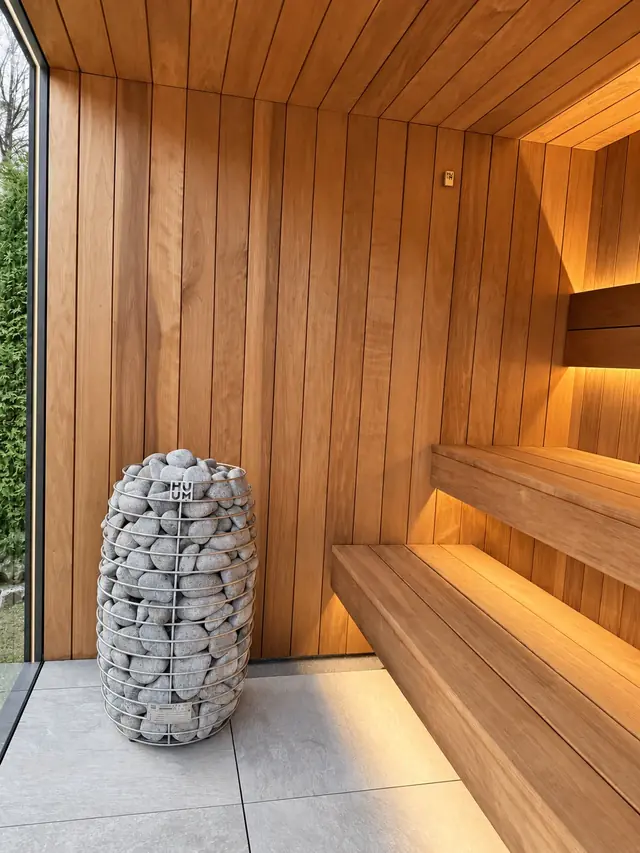
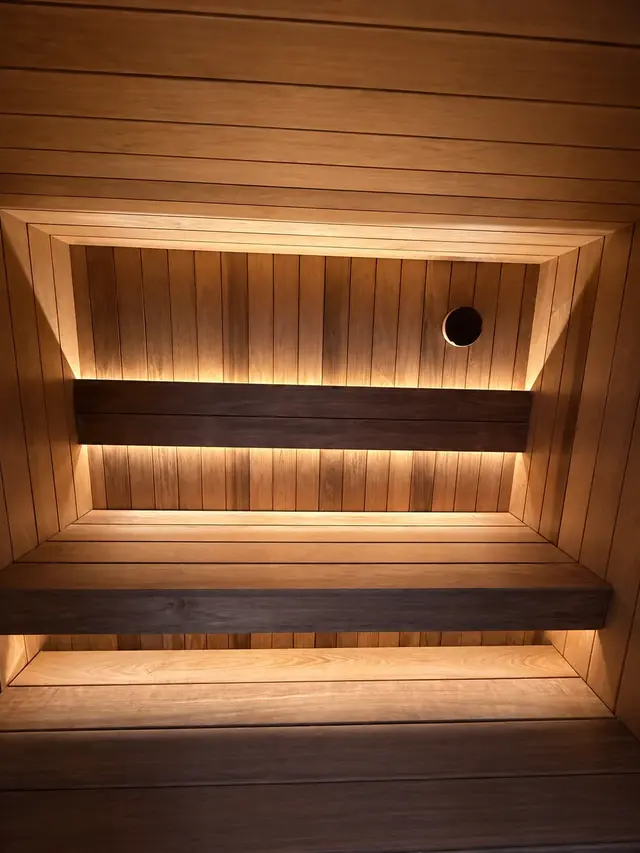
Both model specifications list C24 timber construction. They separately name thermally treated aspen for the interior and Brazilian cumaru hardwood with black metal for the exterior. The frame grade therefore does not identify the timber you will sit beside, and those visible wood names do not establish the frame species. The published documents do not name that species.[1][2]
Think of the frame as the cabin's skeleton: an analogy to help distinguish roles, not a description of every construction detail. The lining is the surface you see in the sauna room; the frame belongs to the structure behind the finishes. Reading those as separate entries makes the specification more useful. You can discuss the feel of the room without confusing an appearance preference with the information needed about the structure. The final project offer confirms the actual materials supplied.
The number 24 belongs to strength, not a load limit
COFORD's research explanation identifies 24 N/mm² as the characteristic bending-strength value associated with C24. We use that established definition, not the report's historical Irish grading rules or its timber-origin findings.[3]
Read the units carefully: this is a material strength value, not 24 kilograms per board and not a maximum number of people for a cabin. It is also not a test result for a completed sauna. The word characteristic matters because it describes the class value used in structural work, rather than a promise that every individual piece has precisely the same measured result. For a buyer, the main lesson is reassuringly simple. You can understand what the code refers to without trying to calculate the building yourself. When a load or design question arises, ask for information about the complete project rather than converting the number into a personal rule of thumb.
Grading asks a different question from choosing a pretty board
Swedish Wood explains that structural timber is strength graded visually or mechanically; the assessment considers strength-related features or measurements. Its guidance separates that task from appearance sorting.[4]
This gives you two useful questions when looking at timber: what is it graded to do, and what do you want it to look like? They are not competing questions. They belong to different decisions. A neat photograph is not a strength-grading record, just as a grading description is not your approval of a decorative surface. Nor does the general existence of two grading methods tell us which method produced the frame timber for your order. Ask the supplier for the applicable material information if you want to know. There is no need to guess from a knot in a photograph or assume that a workshop image shows a complete inspection process.
Strength, appearance and durability are separate properties
Timber Development UK explains that visual selection does not create a higher C24 strength class, and that a strength class does not specify durability. Those are distinct questions, even when they concern the same timber.[5]
The practical implication is to give each claim its own evidence. A discussion about a desired surface should lead to an appropriate sample or finish description. A discussion about protection and intended use should lead to the relevant project specification. A discussion about strength should stay connected to grading and structural information. C24 alone does not establish an FSC or PEFC certificate, a whole-cabin fire rating, a service-life guarantee or an energy saving. None is confirmed by this material code in the available cabin documents. You need not memorise every possible label; simply avoid asking one label to answer unrelated questions.
A hypothetical comparison between two attractive offers
Imagine someone choosing a sauna for a holiday garden. This is a hypothetical buyer's exercise, not a customer account. Two offers both use the word C24. One also includes the proposed model layout and a clear list of what remains to be confirmed. The other relies on a large photograph and the phrase premium construction. The buyer is tempted to treat the shared code as proof that the offers are otherwise equivalent.
A better next step is to make two small lists: information actually supplied, and questions still open. The buyer asks about the offered structure, the final equipment, the site requirements and the documents accompanying delivery. No conclusion about either imaginary building's safety follows from this example. Its point is a comparison habit: a material strength class is useful information, but a complete purchasing decision also needs a complete description of what is being offered. The quieter document can deserve as much attention as the impressive image.
Turn curiosity into a short, useful document request
You can keep this conversation friendly and precise. Ask where C24 is specified in the proposed construction, what material identification is available for the order, and which documents will accompany the finished cabin. If the wood species matters to you, ask for it explicitly instead of supplying an answer from a generic timber website. If you want a construction detail explained, request a labelled drawing or a written explanation appropriate to your project.
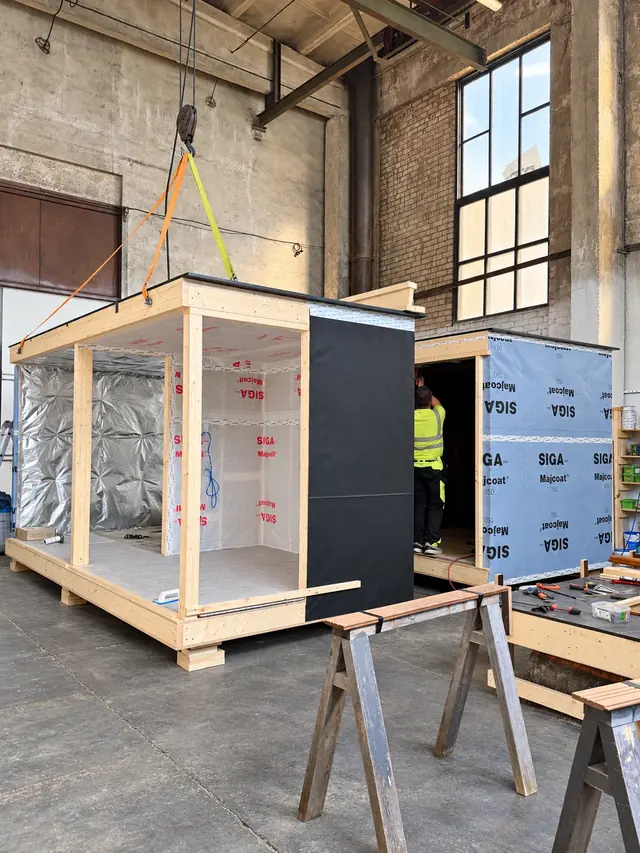
A workshop photograph can help you follow that discussion, but cannot by itself prove the strength class of every member, the design of every connection or the suitability of your site. Keep approved documents together so that later questions refer to the same agreed version. This is a buyer's reading guide, not instructions for changing a frame or selecting structural member sizes. Those decisions require the complete design.
Return to the evening you actually want
Aura is the compact sauna model; Aura Lounge adds a separate lounge. Both list C24 timber construction, but that shared entry does not make their layouts identical. Think about your routine first: a sauna session followed by a walk back to the house, or time in a separate room before returning outdoors. Then ask for the model and material specification that match that plan.[1][2]
Knowing what sits behind the warm surfaces need not make the experience feel technical. It gives you a clearer way to ask questions, then return to imagining the garden path, the room and the time you want to spend there. A first enquiry can include your preferred model, a site photograph and any questions about the frame. The final project offer confirms equipment, finishes and site-specific requirements; the C24 entry is one useful part of that conversation.
Sources & further reading
- Aura technical specificationsAura Cabin · Sources checked on
- Aura Lounge technical specificationsAura Cabin · Sources checked on
- Quantification of the yields of Irish grown Sitka spruce in the new CEN strength classesCOFORD; Valez Picardo · Sources checked on
- Wood gradesSwedish Wood · Sources checked on
- C16 and C24 timber: your questions answeredTimber Development UK; technical explanation by Nick Boulton · Sources checked on
Already have a place in mind?
A few thoughts can become your first project brief.