Begin with the exterior you are actually buying
The product documents for Aura and Aura Lounge list cumaru hardwood as part of the exterior, alongside black metal. They do not establish a specific coating, a guaranteed colour-retention period or an identical timber arrangement for every quotation. Confirm those details for your own cabin before selecting a maintenance product.[1][2]
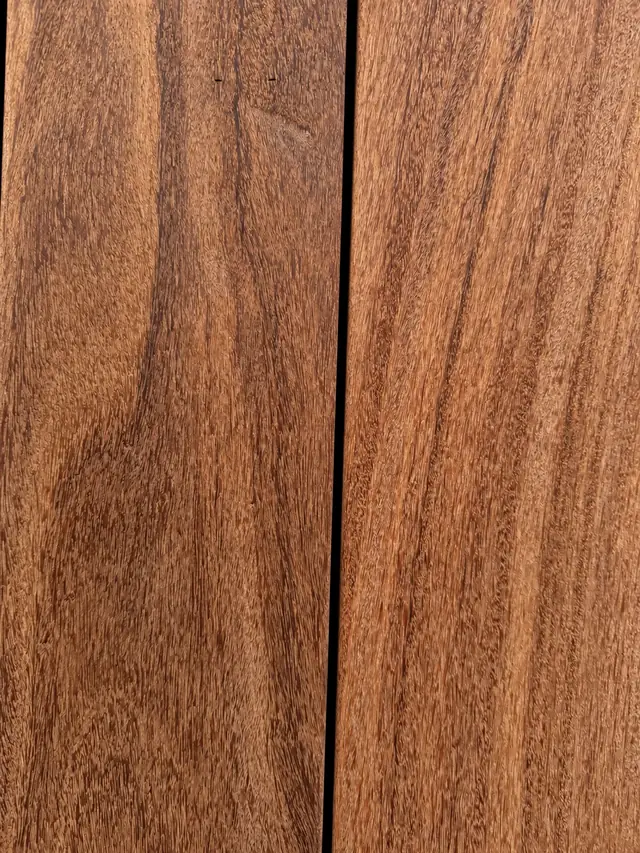
When looking at photographs, separate three questions: which material is pictured, what finish is on it, and when the photograph was taken. A close-up can help you discuss the appearance you prefer, but it is not a promise about the same board after several seasons. Ask for the final exterior specification and care information together. That gives the attractive product image a practical companion: a record you can use after delivery.
What changes at the surface
The USDA Forest Products Laboratory describes weathering as a process near the wood surface involving sunlight and other outdoor exposure. Ultraviolet light affects lignin, one of the substances that helps bind wood cells together. Changes to extractives, water exposure and surface organisms can also influence appearance. This is more useful than imagining that timber simply loses a layer of brown paint.[3][4]
For cumaru specifically, Iron Woods describes a colour range from golden yellow to reddish brown and the possibility of a silvery-grey weathered appearance. Its information concerns its own decking products; it is not a test or guarantee for an Aura Cabin facade. Together, these sources explain why a fresh timber photograph and a weathered sample can look different without describing two different species. They do not supply a reliable countdown to a particular shade in your garden.
Why one side can look different
A cabin does not experience the weather as one flat sample. A face beside an open lawn, a sheltered corner and timber beneath an overhang can have different exposure. The Forest Products Laboratory identifies exposure and wetting-and-drying conditions among the influences on weathering. It would therefore be unwise to expect every board to change at exactly the same pace.[3]
Make comparisons in similar light and after the surfaces have had a chance to dry. Photograph the same viewpoints and add a date, rather than comparing a wet winter phone picture with a bright sales image. This is a simple observation habit, not a diagnostic test. If a particular area behaves differently from the rest, the photographs give the supplier something specific to discuss.
Patina is an appearance, not an inspection result
A gradual colour shift is one thing; a loose board, persistent wet patch, unexpected softness or damaged joint is another reason to ask for help. Do not use the word patina to dismiss a physical change you have not understood. Equally, a grey surface does not by itself establish that the timber has decayed.[3]
The wood handbook treats weathering, biological discoloration and decay as distinct subjects. That distinction matters because a photograph of a stain cannot establish its cause or the condition behind the cladding. Record its location, whether it remains after drying, and any associated change in texture or fixing. Send those observations to the supplier and follow the agreed inspection route. Avoid choosing a chemical treatment solely from the colour of a mark; the remedy depends on what is actually present.
Choose an appearance with a compatible finish plan
If retaining a warmer colour matters to you, ask which exterior system is suitable for the delivered boards and any existing finish. The Canadian Wood Council explains that exterior coatings differ in opacity and sunlight protection. A product that repels water does not automatically offer the same protection from ultraviolet light. The label clear is not a complete performance description.[5]
Request the product name, preparation requirements, compatible cleaning method and the signs that indicate maintenance is due. Have the supplier explain how the guidance applies to vertical cladding, rather than borrowing a routine written for a horizontal deck. If you prefer natural weathering, ask for the appropriate inspection and cleaning plan for that choice. Accepting colour change still leaves you with a cabin to look after. No universal annual oiling rule is established by the Aura specification.
A hypothetical choice for a real garden
Imagine two owners choosing the same cabin for different gardens. One wants the timber to sit quietly beside weathered fencing. The other wants to preserve the warm contrast seen from a kitchen window. Neither preference needs a complicated design argument, but each needs to be written into the conversation before delivery.
The first owner asks what natural weathering will mean for the supplied finish and how to inspect the exterior. The second asks for a compatible colour-maintenance system and who will do the work. Both photograph the cabin at handover and keep the instructions. This is a hypothetical example, not a customer story or a prediction of results. Its lesson is practical: an appearance preference becomes useful when someone can explain the care that goes with it, including access to the sides you rarely see.
Keep a small exterior-care record
Create one folder containing the quotation, material description, finish details, care instructions and dated photographs. Add any advice you receive about a specific mark or board. For a holiday property, identify the person who will notice changes between visits and where that person should report them. This avoids a useful observation disappearing into an unrelated message thread.[1][2]
When you enquire about Aura or Aura Lounge, include a photograph of the proposed location and say whether you favour warmer timber tones or a weathered appearance. Ask us to confirm the exterior combination and finish in the offer. The aim is a sauna you can enjoy through changing seasons, with clear expectations about how its outside will be observed and cared for.
Sources & further reading
- Aura specificationsAura Cabin · Sources checked on
- Aura Lounge specificationsAura Cabin · Sources checked on
- Wood Handbook, Chapter 16: Finishing WoodChristopher G. Hunt, USDA Forest Service, Forest Products Laboratory, 2021 · Sources checked on
- Cumaru Decking: natural colour and weatheringIron Woods · Sources checked on
- Finishing Exterior WoodCanadian Wood Council · Sources checked on
Already have a place in mind?
A few thoughts can become your first project brief.