The surface you see is one part of the system
HUUM describes its GLASS panel as a glass-cased interface used with a UKU control system. The panel alone is not the complete system. That distinction is useful when looking at a photograph: an attractive faceplate does not tell you every component, the controller generation or how the installation has been configured.[1]
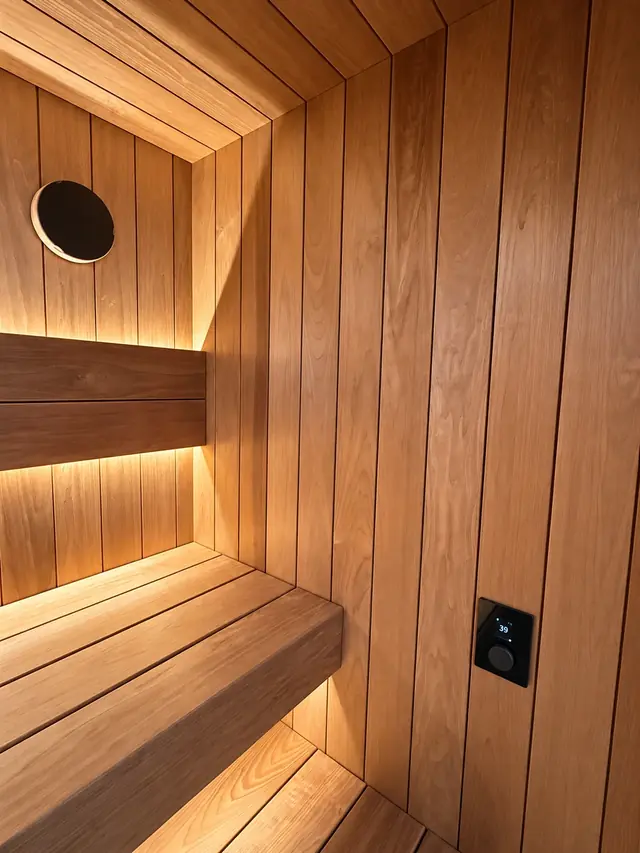
Here the material detail is the visible glass finish, rather than a new claim about the cabin's performance. A black surface against timber creates a clear visual reference for the controls. It does not establish scratch resistance, waterproofness or a particular glass composition. Those are separate specification questions. Choose the finish because it suits the cabin you want, then confirm the actual supplied equipment in the quotation.
Read the cabin specification without filling its gaps
Both current Aura specification PDFs list black-glass Wi-Fi control. The confirmed equipment also includes the HUUM HIVE MINI 10.5 kW heater. Neither PDF identifies a UKU generation or promises that every connected accessory shown on a manufacturer's website is included in your cabin.[2][3]
Keep three questions separate: what the offer includes, what that exact controller can do, and what has actually been connected. Integrated cabin lighting does not by itself prove control through the same panel or app. At quotation stage, ask for the controller identification and handover scope. At delivery, retain the supplied manual with the final equipment record, so a later operating question starts with the right document.
Learn the local routine before relying on the app
HUUM's Wi-Fi system documentation describes local panel operation and phone-app functions. Remote convenience is therefore part of a system, rather than a property supplied by the glass alone. Connectivity and installation need to work at the actual site. A product description cannot demonstrate the signal available beside your garden cabin.[4]
Ask the installer to demonstrate the delivered local start and stop routine, the relevant display information and the instructions for an error. Then check the intended app arrangement with the authorised adult responsible for the sauna. This is a handover agenda, not an installation recipe. It provides no wiring instructions or fixed operating settings, and it does not promise a heating time or uninterrupted connection.
A remote command still begins with the room
The HUUM EU manuals examined for UKU 4.1 and 4.2 require physical safety checks before remote use. The heater and sauna room must be checked, with no objects on the heater and no combustible items within the specified clearances. The door and safety-confirmation process also matter. Opening the door can invalidate the earlier confirmation; follow the exact delivered manual before another remote start.[5][6]
The practical lesson is simple: an app screen cannot confirm that somebody has removed a towel from the heater. Do not bypass a safety feature to make remote operation more convenient. If a fault or unclear indication appears, stop and obtain the appropriate installer or manufacturer support. These common high-level checks do not identify the generation installed in your particular cabin.
A hypothetical arrival with two different responsibilities
Imagine a couple planning a sauna after a walk. Before leaving, one adult checks the room according to the supplied instructions and understands who will be responsible for any later remote operation. This is an illustrative planning example, not an account of a customer session or a promise that this sequence is suitable for every installation.[5][6]
Now imagine that someone goes back into the cabin to collect a bag. The original check is no longer a reason to assume that everything remains ready. The responsible person follows the manual's renewed-check and confirmation procedure. The point of the example is not clever automation: it is knowing when a previous observation has stopped being reliable. A pleasant arrival depends on a clear shared routine as well as a convenient interface.
Aura and Aura Lounge change the arrival, not the rule
Aura offers the compact sauna-focused layout. Aura Lounge adds space for changing and cooling down. That additional room can change where coats, bags and the conversation before a session belong. It does not turn the sauna heater into a storage surface or remove the need to check the sauna room.[2][3]
When comparing the models, picture an ordinary arrival with the things you actually carry. Where do you leave a coat? Who knows the controls? Who checks before heating? These questions connect the specification to everyday ownership without inventing a guest experience. The same black-glass detail can fit either layout, while the responsibility for safe operation remains concrete and personal.
Make the handover useful for the next person
A good record is more useful than remembering that the panel was explained once. Keep the final model identification, supplied operating manual and agreed support contact together. Ask what to do if the local panel and phone show something unexpected, and make sure the people authorised to use the sauna know the documented stop procedure.[5][6]
For shared use, agree who is responsible before each session. Do not assume that the last person has checked the room or that a saved phone status describes its current condition. These are practical ownership questions, not claims about commercial-use approval. If you are planning hospitality use, raise that intended use explicitly when requesting the final configuration and installation advice.
Choose the detail with the whole cabin in mind
The real product photograph shows the black control against the timber interior. Use it to judge the relationship of materials, not to copy a displayed temperature as a recommendation. The control is one touchpoint within the cabin, alongside the bench, doorway and places where you prepare for the session.[2][3]
If this is the kind of sauna you can picture in your garden or at your holiday property, ask for an Aura or Aura Lounge quotation that confirms the finish, exact control equipment and handover arrangements. A clear offer connects the quiet visual detail to an understandable daily routine. The final project specification remains the place to confirm what you are ordering.
Sources & further reading
- UKU GLASS control panelHUUM · Sources checked on
- Aura specification sheetAura Cabin · Sources checked on
- Aura Lounge specification sheetAura Cabin · Sources checked on
- UKU WiFi sauna control systemHUUM · Sources checked on
- UKU4.2 EU user manualHUUM · Sources checked on
- UKU4.1 EU user manualHUUM · Sources checked on
Already have a place in mind?
A few thoughts can become your first project brief.